

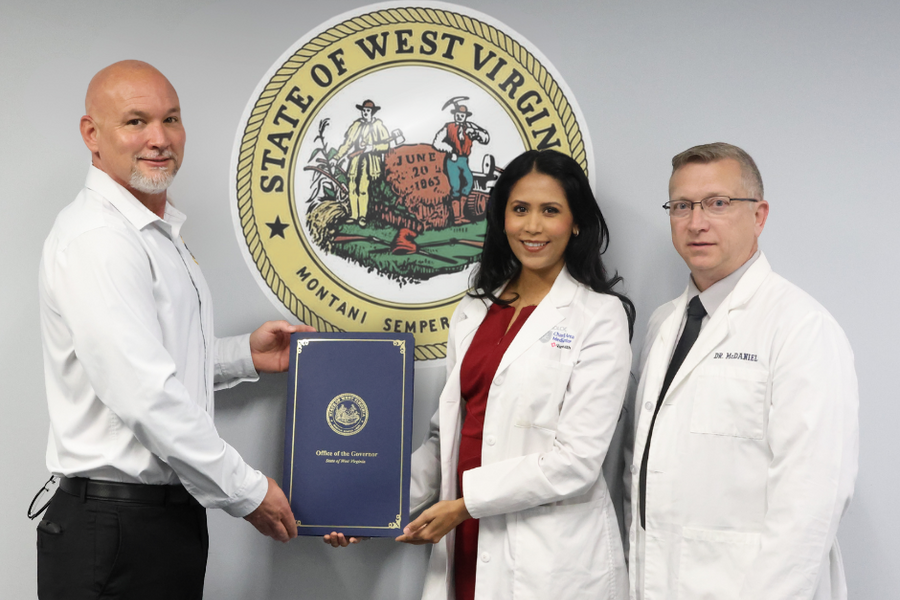
The West Virginia Department of Health launched a public health initiative on May 1, called Stroke Smart State, after the program was introduced to state health leaders by Rena Sukhdeo Singh, MD.
The Stroke Smart West Virginia initiative focuses on public education campaigns, partnerships with healthcare providers and community engagement to ensure that residents understand the urgency of stroke symptoms and the importance of calling emergency services without delay.
Central to this initiative is educating the public about the BEFAST acronym – a simple and effective tool that helps identify the most common signs of stroke:
Balance: Sudden loss of balance or coordination
Eyes: Sudden trouble seeing in one or both eyes
Face: Facial drooping, uneven smile or sudden severe headache
Arms: Sudden weakness or numbness in the arms or legs
Speech: Slurred speech or difficulty speaking
Time: Time to call 911 immediately
CAMC Neurology also has implemented BEFAST Fridays.
Every Friday at the end of each patient visit, outpatient clinic providers discuss stroke symptoms and give patients a BEFAST flier to expand the reach of BEFAST education to all ambulatory specialties.
"It's an honor to help bring this program to the state and Vandalia Health,” said Rena Sukhdeo Singh, MD, CAMC Neurology. “The hope is that patients and their families will learn the BEFAST symptoms and be able to spot a stroke, stop a stroke and save a life ultimately reducing long-term disability, death and healthcare costs.”
BEFAST posters also have been distributed to various nursing units for further awareness.