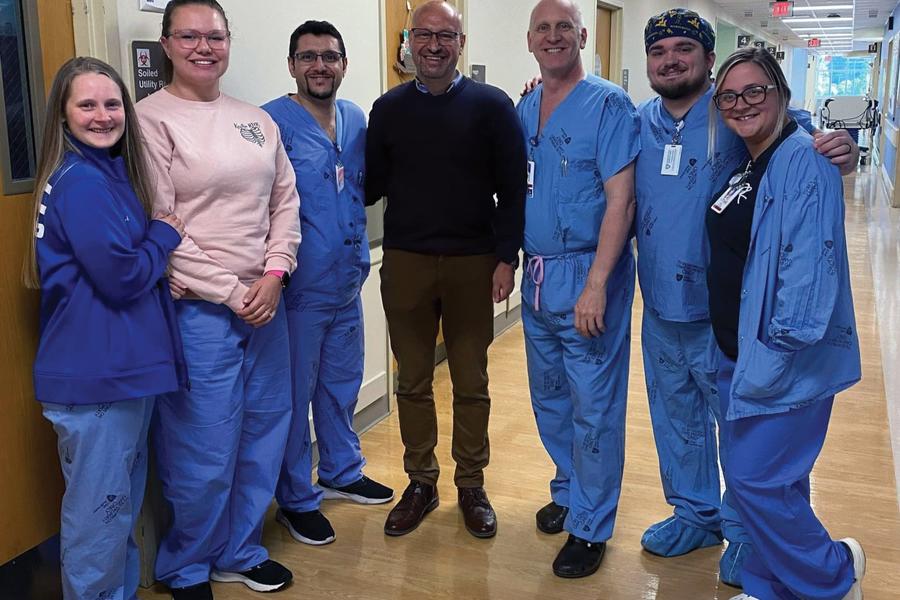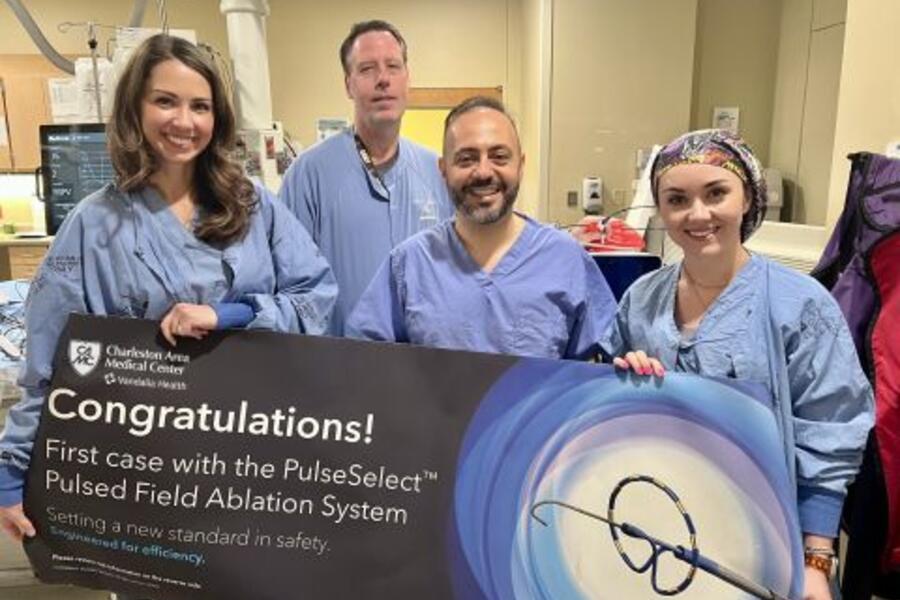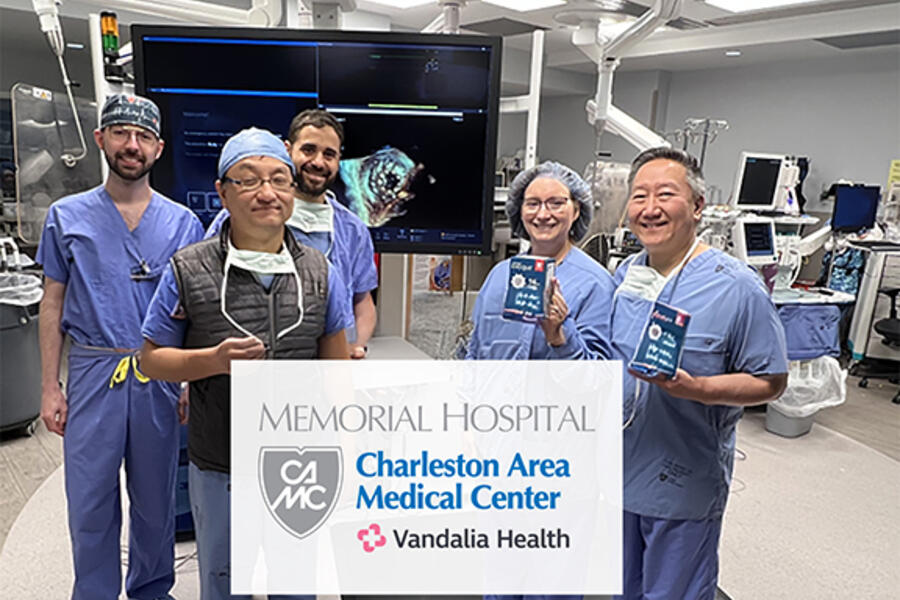

Our team includes medical and interventional cardiologists and is part of our extended heart care team that includes cardiothoracic surgeons and electrophysiologists, working together to provide the most advanced patient care.
Our Approach to Cardiology
At CAMC, we put patients first. With a highly trained and experienced team, and using the most advanced technology available, we are advancing the field of cardiac care in our region. As one of the top heart programs in the country, we’re proud to offer:
• An experienced team of specialists that includes medical and interventional cardiologists, cardiothoracic surgeons, cardiac electrophysiologists, vascular surgeons and specialized advanced practice providers and nurses.
• Advanced structural heart program that performs groundbreaking, life-saving procedures every day.
• Open heart, minimally-invasive and robotic surgical capabilities using the most advanced technology available.
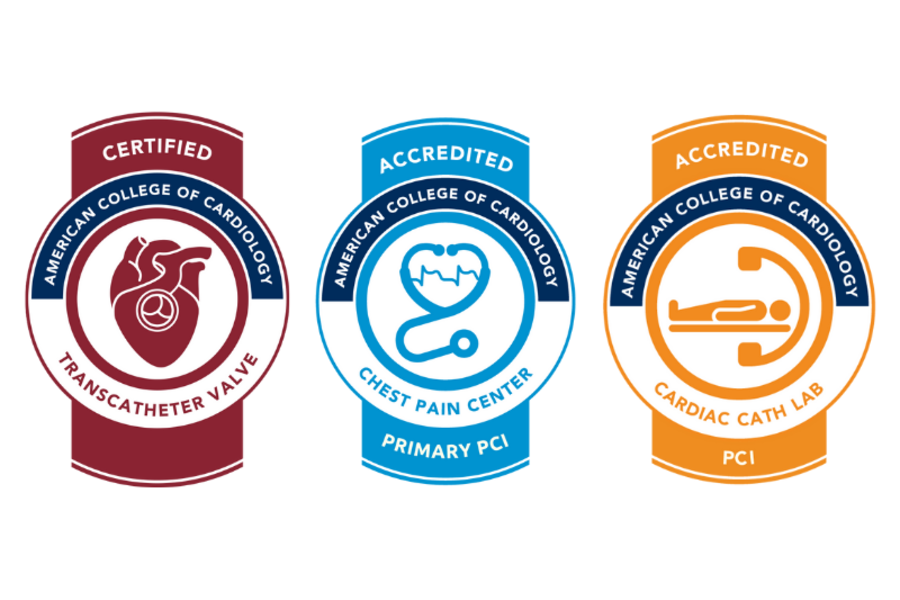
• A suite of cath labs that are accredited by the American College of Cardiology as Cardiac Cath Lab v1 with PCI and Chest Pain with PCI
• Cutting-edge electrophysiology labs equipped with advanced technology and specially trained staff.
• Advanced cardiac imaging and diagnostic testing using state-of-the-art equipment.
• Outpatient Congestive Heart Failure and COPD Clinics to manage risk factors and improve heart and lung health.
• Cardiopulmonary rehabilitation and supportive care.
Patient education
A heart attack occurs when blood flow to the heart muscle is blocked and one or more parts of the heart don’t get enough oxygen. Someone might have one or more of these common symptoms. When they start, they can be mild or come and go. Over time, the symptoms and pain become more intense. Stay alert and always pay attention to chest pressure.
Learn the early signs and symptoms:
- Feeling of fullness
- Pain that travels down one or both arms
- Jaw pain
- Excessive fatigue or weakness
- Anxiety
- Nausea or vomiting
- Back pain
- Shortness of breath
- Chest pressure, squeezing, aching or burning
What are the risk factors?
- Chest pain, pressure, burning, aching or tightness – it may come and go
- A family history of cardiovascular disease
- High blood pressure
- Overweight or obese
- Sedentary lifestyle
- Using tobacco products
- Metabolic disease, diabetes or other illnesses
- For women, it can also include birth control pills, a history of pre-eclampsia, gestational diabetes or having a low birth weight baby
Our approach to early heart attack care
CAMC wants you to know the signs, symptoms and risks of a heart attack, and how to respond if you or someone you know exhibits these symptoms.
People with heart attack symptoms should be evaluated in an emergency department. CAMC’s doctors, nurses and staff in our emergency departments are trained to respond quickly to heart attack symptoms and provide the care they need.
If you suspect that you or someone you know may be having a heart attack:
- Call 911
- Perform hands-only CPR
- Find an deploy an automated external defibrillator (AED)
CAMC offers basic life support training classes that are available to the public.
What are atypical presentations of a heart attack?
In an atypical presentation, the signs and symptoms are different. The patient may not complain about pain or pressure in the chest. Be alert for the following:
- A sharp or “knife-like” pain that occurs with coughing or breathing
- Pain that spreads above the jawbone or into the lower body
- Difficult or labored breathing
What is the difference in symptoms between men and women?
Some heart attack symptoms can be different between men and women. Why does it matter? Women may be less likely to seek immediate medical care which can cause more damage to the heart.
- Men normally feel pain and numbness in the left arm or side of chest, but in women, these symptoms may appear on the right side.
- Women may feel completely exhausted, drained, dizzy or nauseous.
- Women may feel upper back pain that travels up into their jaw.
- Women may think their stomach pain is the flu, heartburn or an ulcer.
Heart disease doesn’t always come with warning signs – but your risk can be measured. In just one visit, you’ll get a clearer picture of your heart health – and what to do next. Our heart risk assessment uses trusted tools like:
- Framingham Risk Score
- ASCVD Risk Calculator
- Coronary Artery Calcium (CAC) Scoring
Knowing your number can help you take action early. The Framingham Risk Score is one of the most widely used tools in cardiology. It looks at factors like:
- Age
- Blood pressure
- Cholesterol
- Smoking status
…and estimates your risk of developing heart disease.
Did you know your risk of heart attack and stroke can be calculated? The ASCVD Risk Calculator helps predict your likelihood of a cardiovascular event – before it happens. This means:
- Earlier intervention
- Personalized care
- Better outcomes
Do you know your heart disease risk?
Most people don’t – and that’s the problem. Heart disease often develops silently. A simple assessment can give you answers and a plan.
My risk is higher than I thought.
A heart risk assessment can uncover what you can’t feel. Our team uses advanced tools and expert guidance to help you understand your risk – and reduce it.
Don’t wait for symptoms
Heart disease is often preventable – when you know your risk.
- Quick assessment
- Personalized results
- Trusted clinical tools
Cardiac arrest can happen anywhere and to anyone. Being prepared means you can make a difference for a friend, family member or even a stranger. Hands-only CPR is a simple skill that anyone can use to help keep blood flowing until professional help arrives.
If someone collapses and isn’t breathing normally:
- Check for responsiveness
- Call 9-1-1 immediately. Get an AED if available.
- Push hard and fast in the center of the chest. Place the heel of one hand in the center of the chest. Place your other hand on top and interlace your fingers. No mouth-to-mouth needed, just strong, steady compressions. Push down hard at least 2 inches deep and release fully. Do this 100-120 times per minute.
- Keep going until help arrives or the person starts breathing normally.
Patient Educational Videos
Note: The animated videos presented are for educational purposes only. They are designed to provide a general understanding of medical procedures. Please note that the actual medical procedure may vary and is subject to change based on the discretion of the physician and the specific needs of the patient. Always consult with your health care provider for personalized medical advice and information about your treatment options.

CAMC Cardiology Specialists
CAMC Cardiology is a department of specialists employed by CAMC that offers the services represented on this page. CAMC offers a range of first-rate cardiac services provided by highly-trained physicians who are committed to keeping you healthy.
What Sets Us Apart

More Experience than Anyone Else
For more than 50 years, CAMC has put their hearts into taking care of yours. Our team of heart specialists have over 900 years of combined experience. As one of the highest volume heart programs in the country, we perform thousands of routine and complex procedures every year.

Research and Training
As health care continuously changes, our physicians work to stay on top of emerging trends and research. CAMC’s cardiologists actively participate in research for the latest heart care treatments and procedures. Our faculty also train residents and fellows in the CAMC Institute of Academic Medicine’s residency and fellowship programs.

Advanced Cardiac Care, Close to Home
We have responded to the growing needs in our communities by expanding services throughout the state with locations in Charleston, South Charleston and Summersville. With multiple locations, we can ensure more patients have access to CAMC’s high level of cardiac care close to home.
Our Recognitions
U.S. News & World Report
Named a High Performing Hospital for Heart Failure in 2024-25 by U.S. News & World Report.